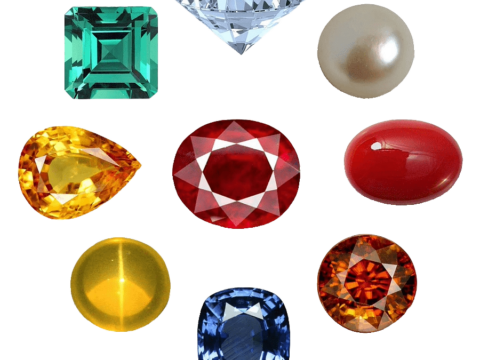
माणिक्यं दिननायकस्य
māṇikyaṃ dinanāyakasyā
Translation: māṇikyam (ruby etc. māṇi) is is the gemstone of the lord of the day (Sūrya)
Notes: dinanāyakasya — of the lord of the day (Sūrya) > → Ruby is the gemstone of the Sun
The formula is māṇikya ↔ Sūrya
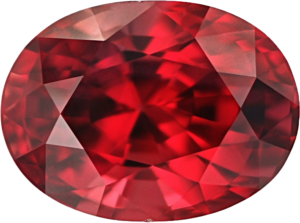
Understand Ruby
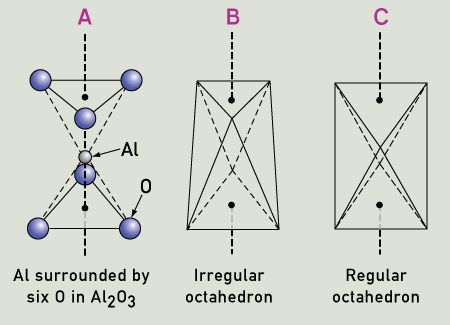 Ruby is chemically a form of the mineral corundum, whose composition is aluminium oxide (Al₂O₃). What makes it a ruby rather than a colorless sapphire is the presence of trace chromium (Cr), which substitutes for some aluminium atoms in the crystal lattice and produces the red color.
Mineral species: Corundum
Chemical formula: Al₂O₃ (aluminium oxide)
Chromium content: Small amounts of Cr³⁺ ions incorporated into the lattice
Color origin: Chromium causes the characteristic red hue; pure corundum is colorless.
Ruby = Aluminium oxide (Al₂O₃) + trace chromium (Cr³⁺); This combination, under high temperature and pressure, produces the red variety of corundum known as ruby.
Crystal Properties
 Crystal system: Trigonal (hexagonal scalenohedral)
Hardness: 9 on Mohs scale (second only to diamond and moissanite)
Specific gravity: ~3.97–4.05
Refractive index: ~1.762–1.770
Primary Maṇipūra Śloka
nābhideśe sthitaṃ cakraṃ daśāraṃ maṇipūrakam ।
Yogaśikhā Upaniṣad
Translation: In the region of the navel is the Maṇipūra chakra, a lotus of ten petals.
nābhi‑deśe — in the region of the navel; sthitaṃ cakram — there is a chakra; daśāram — having ten petals; maṇipūrakam — the Maṇipūra (city‑of‑jewels) chakra
madhye tasya tu vahni‑maṇḍala‑lasat trikoṇa‑saṃyujjvalam ।
tatra sthāpayati prabuddha‑kuṇḍalīṃ lakṣmī‑samāna‑prabhāṃ
lakinyā saha raṃ‑kṣara‑yutāṃ devīṃ maṇipūrābhidhām ॥
Ṣaṭ‑cakra‑nirūpaṇa
Meanings: A ten‑petalled lotus, shining like yellow fire;
A red, downward triangle (Agni‑tattva) in the center
Bīja: रं raṃ
Deity: Rudra or Vahni
Śakti: Lākinī
nābhicakre kāyavyūhajñānam ॥ 2.9 ॥
Pātañjala Yoga Sūtra
Translation: By saṃyama on the navel‑chakra, knowledge of the structure of the body arises
Petal‑Mantras of Maṇipūra: The ten petals bear the following Sanskrit letters: ḍaṁ, ḍhaṁ, ṇaṁ, taṁ, thaṁ, daṁ, dhaṁ, naṁ, paṁ, phaṁ
Bīja‑mantra: raṃ (रं) — the seed syllable of Agni